
“Eventually, you arrive” - Oliver Say on authenticity, collaboration & storytelling
“No one can care about it as much as you do"

In an age where it is proving harder than ever for artists to carve out sustainable careers for themselves, it is up to us all to celebrate and support talent in any way we can.
As an artist, what makes Oliver Say so exciting is his vision, his authenticity, and his expression of bold creativity. He has built a community of creatives around him to help articulate those ideas - his clear creative identity. The quality shows in both music and moving image.
You can’t rush good art, it takes time. It requires patience, belief and silencing the inner critic.
I sat down with Oliver to discuss his debut offering, “Thoughts Awry” - a daring visual album whose wide ranging influences, spanning indie, rnb, electronic and jazz shine throughout its core.
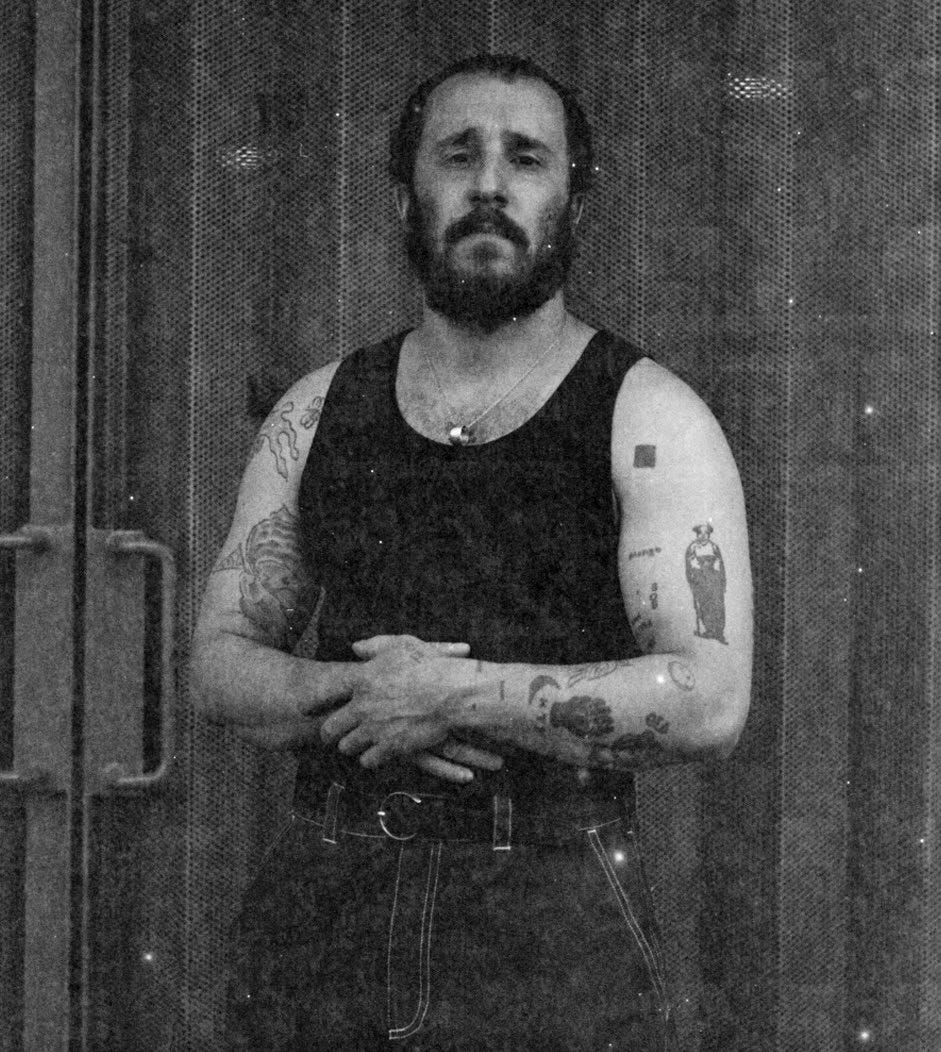
Sunny: Your debut album ‘Thoughts Awry’ is out in the World, could you talk about how the album first took shape? Was there an initial concept for an album, or did it bloom song-by-song?
Oliver: It’s been such a long process that it’s difficult to pinpoint exactly where the inception of the record actually originated. I think the first piece that I wrote for it was ‘Still As Still’. And then the songs started trickling in slowly. Maybe a riff idea at home or something sparked in a writing session somewhere. I can’t remember when, but I remember the title flying into my head at some point maybe towards the end of 2023. I guess that’s probably where it really started to take shape. Having a title, or I guess, a concept to work towards gave me some guideline and helped me categorise what I’d already written. And once I had that, I got to work on how to build it as a longer form project.
I started noticing slowly that all the pieces I was choosing for it were heavily introspective. I wonder whether the reason for it is that it’s all been written during a time where people are so concerned with scrutinising everyone else, which I’m guilty of doing myself, but I think I’ve been trying for some catharsis in investigating myself and contending myself on that. And that’s what the record is really. A series of conversations with the self trying to iron it all out.
Sunny: That introspection shines throughout the album. To me, it is a delicate woven blend of r’n’b, jazz, and indie, sexy and seductive, ideal for listening on headphones. Which artists, performers or creatives have inspired the songs on this record, and how did you bring that influence into the DNA of this release?
Oliver: I always enjoy hearing how people perceive the record. I get so many different descriptions or flavours of what people hear when they listen to it, and oftentimes people notice things coming through that I don’t notice myself.
There’s a lot of variety on the record. There are some obvious ones, Radiohead are obviously a big one. Their textures and chord movements and the way they build certain pieces cinematically has inspired me for a long long time.
D’Angelo has been hugely influential where bringing soul and tone to the record is concerned as well, particularly on ‘Leftfelt’. ‘1000 Deaths’ was the main tone reference for that song.
Talk Talk are a huge influence for me, especially their ‘Spirit Of Eden’ and ‘Laughing Stock’ records. In fact, there’s a song on the record - ‘Terror Bloom’ - that, from before we’d even tracked it all, I was describing as my love letter to Talk Talk and James Blake. When we recorded it and put it all together, it was one of the songs that sounded exactly the way I heard it in my head. Looking back at that song as well, I think Moses Sumney crept in for the outro. A little covert sprinkle of ‘Quarrel’.
There are a lot of others seasoned across the project as well. Keeley Forsyth is one of my favourite artists and she really inspires vocal performance for me. She has such a commanding and meticulous vocal performance and I love that for certain pieces. But then, artists like Kendrick inspire a versatility in vocal performance. Sometimes the song wants laziness or delicacy or something in between, so I go after the artists I know that have exhibited that with mastery and try to channel it. Kendrick was also a direct influence on the shape of the record. I love the theatre of ‘Mr Morale’ and I wanted to give this project a shape or a story, rather than it being just a collection of songs. That’s where the intro, interlude, outro come from. Little sound bites that floated into my head at different times and gave some coherence to the structure of the broader story. And it would be remiss of me not to mention Jeff Buckley as well. An artist that has been with me and continually influencing much of what I do for the last 13 years or so.
There are also hints of Bon Iver and Johnny Flynn, as well as Nils Frahm and a bunch of others in smaller doses. There are those that I really fixate on for myself, and then there are those that other people point out to me that I haven’t caught myself.
Sunny: You mention storytelling there, how has the visual language (music video, visualizers, social media content) helped shape the identity and universe of this album? And do you feel music videos / visualizers are being overlooked by artists and musicians as an important arm of artistry?
Oliver: This one’s an interesting one. I think the value of them is lessened these days, depending on how you quantify that. But I also think the value of everything is lessened these days. Oversaturated landscapes and an immense passivity sort of engulfs everyone and how they consume art and media. There’s always another song to listen to and there’s always another video to watch. But I think it depends on why you do it.
At this point, my objective for spending time exploring the visual side is to make the world of the project make sense. What was really enjoyable about this project was that I had Rashidi Noah work with me as creative director across the whole project. In its earlier days, we spent a lot of time just talking, conceptualising - him asking me questions and teasing out what this whole thing wanted to be. It gave me an opportunity to approach all of it in a really academic way, which meant that every visual choice was predicated on a filter that we built from the ground up.
We took a lot of influence from people like Hiro Murai, Igor Klepnev, The Smile, Tarkovsky, Nowness, Robert Eggers, Keeley Forsyth and a bunch of others. It’s hard to keep track of them all and we sifted through so many different reference points.
With this project, one of our main aims was to bring the visuals toward the real world and tangibility. Previous videos of mine have been, for a lack of a better description, very artsy, which I love, but it does create a bit of a barrier to entry, especially because I have a thing for more macabre imagery. So we wanted to be more real world with all of it. Put the videos in real world places and scenarios. Places that I, or we, frequent. Use the day-to-day as metaphor for something bigger.
The video for ‘Leftfelt’, for instance, was intended to be this disoriented drifting, or almost stumbling, through places that I spend a lot of time in. And the videos for ‘L.A.Me’, ‘Tell Them’ and ‘We Need’ are still heavily metaphorical and theatrical, but they’re rooted in real life.
For ‘We Need’, you have a scene with someone packing up to move house, putting their life into a chest and having it all spill out while they’re fighting with it. For ‘Tell Them’ you have a strong male archetype in jeans and a vest just carrying weight uphill. And for ‘L.A.Me’ you have a room at a social club with myself on stage pleading to the room where no one is listening.
All of these things, whether they’re watched 10 times or 10,000 times, serve a purpose of giving context to the music and the story. I don’t think that’s ever a waste of time, because regardless of who’s watching, you’ve made something of substance, and that will always resonate I think.
Sunny: That’s a really important point for artists and creatives to consider. We’ve talked privately about the creatives in and around your social circles. Who has been involved and how would you pay tribute to what they have brought to the album?
Oliver: Okay, settle in I reckon..
I’ll start with the music side. There’s a big 3 for the project, and they’re Fred Bailey, Beau Harrison and Lavar Bullard. All three are long-time collaborators of over ten years.
Fred engineered, mixed and produced the whole record with me. And Beau also recorded and helped with mixing and production across the whole record as well. These two in particular have given so much of their own time and energy to helping me put it all together that I can’t really articulate how thankful I am, and they’re two of my closest friends and two of the most talented people that I know of.
Lavar and I have been friends for a long, long time and he’s just incredible. We met while I was in college and have been working with each other ever since. He’s helped to such an enormous extent over the years and he’s responsible for mastering the record. And he fit it in alongside mixing and mastering some insanely high profile projects as well as touring the world doing live sound. I’ll forever be indebted to him.
In addition to these three, there’s also Alexander Painter - an unbelievably talented and painfully modest musician that has come to be a very good friend these past few years of working together. He contributed all of the cello and sax across the project and brought so much of the vision to life, particularly for ‘Leftfelt’, ‘Still As Still’ and ‘Go Swim Sail’.
Then there’s Ezrah and Tony Njoku, two world class artists in their own right, and two very dear friends. Both of them have been a regular ear for referencing the record throughout, as well as contributing on some of the songs. Tony, notably on the outro for ‘Leftfelt’, spent an evening with me tracking his synth to tie the outro together. Ezrah, notably helped significantly with the writing of ‘Fickle Trickle’s second verse. We spent hours while I was doing a residency at Prah in Margate locked in the studio ironing out structure and textures, tracking flute and vocals and synth and whatever else we were doing. He brought that second verse together. And he is also featured on ‘Inches Apart’.
Then there’s Bjork Óskarsdóttir and Jonny Akerman - two exceptional musicians and wonderful people. Between them, they contributed all of the violin for the record. Jonny can be heard on ‘Fickle Trickle’ and Bjork can be heard on ‘Terror Bloom’, ‘Still As Still’ and ‘Go Swim Sail’.
I also spent a day with Rian O’Grady, another phenomenal musician that I get the privilege of sharing stages with alongside Tony Njoku and Alexander Painter. For ‘Inches Apart’, I wanted to track some modular synth, so we spent a day drinking tea, eating sandwiches, talking shit and getting proper involved with his Eurorack modules.
Also, last but certainly not least, a special shout to my Mum for joining me on the chorus line for ‘Fickle Trickle’.
Sunny: And what about for the visuals?
Oliver: First and foremost, to Rashidi Noah, I’m indebted to you. Rashidi and I have loosely been in orbit for over ten years, but have come to work closely with each other these past four or so years as a result of me spending so much time in writing sessions with Ezrah. Rashidi by trade is a photographer, but he’s also just a genius. He walked into the living room one day a few years back and said ‘Ols, let me do your creative direction, free of charge’. That’s where it all kicked off. All of the visual world around this project has been built from the very beginning with Rashidi. We’ve spent hours and days talking about influences, tones, textures, colour palette, moods; scouring art books, Pinterest, screenshotting films and music videos, scanning notebooks. Just doing everything to dig out what this whole thing wanted to be. The world of the project wouldn’t be what it is without him. And through him, I now have an even bigger network of incredible friends and collaborators.
Shannon Prince, for one, someone immensely talented and a privilege to work with. Shannon has helped so much with producing music videos, being a referencing eye for artworks, assisting with artworks and just being a superstar in general. She’s incredible.
Another very close friend, and someone I’ve been working with for five or six years, is Gregor Emmanuel. He’s responsible for bringing the ‘Leftfelt’ vision to life and he’s an outstanding filmmaker and DOP.
Then we have Rob Akin, who kind of came out of retirement to film the videos for ‘L.A.Me’, ‘Tell Them’, ‘We Need’ and ‘Crises’, in addition to editing the videos for ‘Crises’ and ‘Still As Still’ and colour grading all of them. Another profoundly talented filmmaker and creative that I have the privilege of working with.
Amy Mauvan, one of my favourites in the world and of my closest friends. Amy, a collaborator of some years now, is the phenomenal movement director that worked with us on the ‘We Need’ video, helping us carve out the sequence for Leah Grant. (She also choreographed the video for ‘Breathe’ for those who haven’t seen that one).
And Leah Grant, another very close friend and outstanding movement artist - I don’t know how to thank her for the performance she gave for ‘We Need’. She was awe-inspiring.
And a similar sentiment to Giacomo Busato, a very dear friend who gave so much to the video for ‘Tell Them’. For hours he was carrying a sandbag up and down a hill, to the point that it chewed up his shoulder, but he didn’t complain once, and his performance was stunning.
Then there’s special thanks to Adam Aouati, for assisting on so much of the visuals and being such a powerhouse professional to work with. To Danny Strasser for being an incredible AC and focus puller. To Idris Green-Holder for helping so much with release logistics and strategy and just generally giving his own time to assessing the overall project and advising on how it should be put to all of you. To Derrelle Elijah for being an advisor on type aesthetics and artworks, as well as being a long time friend and incredible talent. To Rue Blenkinsop for giving her time and performance to the video for ‘L.A.Me’.
And on the cover art..
To Rashidi Noah once again for a day spent in the sun trying to catch the right image on the home roads. To Leili Khabiri for her artistry in sewing the black veins that I’m wearing. To James F Johnston, my favourite painter, for his grace in allowing me to use a piece of his original work as the sky I’m stood under. And lastly, again, to Shannon Prince, for helping me piece the final image together on a sunny Sunday afternoon. It was the final piece of creation for the record, and I’m humbled to have been able to execute that last piece of it all with her.
Sunny: That’s an impressive community of creatives. It feels like the creative process for many people, like aspects of 21st century life, has become solitary, thanks to home recording software and access to tech. What have you gained and gleaned from working with other creatives, and what advice would you give to other artists on finding and growing a community?
Oliver: I would definitely agree with that. It is a very solitary endeavour for a lot of people, myself included. I would say that creating solitarily has a lot of benefit, in that you can allow yourself time to shape and explore a new idea. The wonderful thing about then bringing that into a shared space is that the idea becomes a bigger thing. It becomes shared even before it’s finished. And it allows the idea to evolve and become something you hadn’t considered.
‘Fickle Trickle’ is a good example of this for instance. I had the shape of the song for a while, but it wasn’t until I took it to a session with Ezrah that it came to life. And during the mixing process, I had no idea what it wanted to sound like, so me and Fred just got to work and dug the mix out of what we had. It ended up being possibly the best mix on the record. And as much as I enjoy creating in my own space, it does get to feeling arduous and heavy, so when there’s someone else in the room, it interrupts that laborious energy and becomes a shared problem to solve which is exciting. (Provided you’re in a room with the right person I suppose).
I think authenticity is key for community building. Even if people don’t all the way resonate with the work, they resonate with the authenticity of your passion for it, so the work is respected either way. And if you’re looking to work with other artists, make sure it’s someone whose work you love. It’s easy for it to feel taxing if you’re having to fabricate enthusiasm and it doesn’t serve the work at all if you’re trying to make something substantive.
Sunny: It’s very easy to imagine an album falling into place successively and succinctly. To help the audience get a true depiction of what it takes to craft a family of songs, could you speak on the setbacks you encountered? How did you ride these waves?
Oliver: Christ, how long have you got?
I think it’s a difficult question to answer because there are so many variables to it and it depends on what kind of project you’re trying to put together. In my case, we were trying for something really 360 and detailed. Something that encompassed lots of live instrumentation recorded in various places, in addition to the mixing and production that comes with that. It’s a lot of work.
Then there’s all of the visual works to take into account. Hours flicking through art books and scouring Pinterest for the right references, digging out notepads and scanning them, shooting film, gathering video references, checking out locations etc etc. Then that it was self-funded and I had to call in a lot of favours. It was long hours, lots of trains and phone calls, lots of chasing, negotiating, reorganising, reinspiring and so on.
The biggest problem I think is that no one can care about it as much as you do. So when you’re putting things together that require more than just you, you’re kind of at the whim of those you’ve called in and what they can give.
Oftentimes deadlines are missed or the planned work doesn’t look or sound right. It’s difficult to separate expectation from the timelines you put in place. But to be fair, I think that’s true even of projects that have a team and a budget. And I say all this without discounting how fortunate I am to work with the people that I do, because even though I have to wait sometimes, the work they deliver is always something of high value and means so much more because they’re doing it from a place of simply wanting to be involved and believing in the project. That’s a special thing. I guess the waves are just what they are, and you don’t so much ride them as you just keep swimming through them when they’re trying to wipe you out, and eventually, you arrive, not quite being able to figure out how you got there.
Sunny: More music was released in a single day in 2024 than the entirety of 1989. We are blessed and blighted by oversaturation in music. Blessed because there are so many opportunities to find music we love, music that inspires us and connects deeply. Blighted, because it is harder than ever for artists to have their voice heard and harder still to build a fanbase that can financially support them.
What is your approach to finding fans? What would you like potential admirers to understand about you and your music?
Oliver: My approach to finding fans is still firmly under construction. But I’ve also spent a long while now in the creation phase and it’s hard to balance everything while you’re fixated on that. Now that the record is finished, I feel like I have a real body of work to go and share with people who might resonate with it. I have some new ideas brewing as well that I think will broaden the horizons of the project by bringing it into newer spaces and appealing to a more varied audience. But the usual stuff applies really, sending it for playlist consideration, paying for advertising where I can, but the best thing you can have is people talking about it, so I’d like to now put some more focus on creating real life moments that are tangible for people. Somewhere they can go and experience some of it in a room as a collective. Feels like we’re missing a lot of that these days, competing for online space, but people still need contact.
What I would love for people to take away from this project is the authenticity of it. This particular point is really imperative for me. These works that I make come from a series of real experiences that are just as much mine as anyone else’s. The subjectivity is in how they’re packaged and how I package mine won’t be for everyone’s taste, which is fine. But I hope that anyone that comes into contact with these works can recognise that, irrespective of whether they resonate with it or not, I’m trying to dissect and express something in an authentic way, and as someone that is pretty introverted, this is my way of trying to speak to people, in the same way the artists that I love speak to me through what they make.
Sunny: It’s all connection. So, what does the future hold for Oliver Say? Where can people connect with you, see you perform live? And is there anything else you’d like to share on what is coming up; ideas that are exciting you?
Oliver: The future’s looking exciting. There’s a lot of new ideas that I’m working on and feeling really connected to, and there will certainly be more music to come later in the year. Sadly, when these questions go out the release show will have been and gone and the next show is currently unconfirmed. But I urge anyone interested in the project to follow on socials (mainly Instagram), or better still, sign up to the mailing list. I only email when there’s something upcoming so they won’t have to worry about me sending in pictures of people’s dogs in the park or other such randomness. Just the good stuff. I’ll link those below.
Coming up there’s some real nice things in the pipeline. I’m working towards a book which is very exciting for me. I’ve been wanting to dip my toe in the literary world for a while now and this seems like a good time to do it. There’ll be more details on that soon enough now that I can see past the record as well.
In Summer there will be a standalone single that’s a bit of an outlier for me sonically, but it was written during a really inspiring trip and made in a really inspiring place. And I love the song so it’s going out. After that there will likely be a couple of EPs and one or two collaborations in the gap between now and figuring out what the next record will be. Although I have already started looking towards that as well.
So yeah, lots for me to be getting on with as always!
Sunny: Thanks for reading. If you’ve enjoyed this interview, please leave a comment below and share this around. I hope to do more features and interviews to support artists and the Music Industry as a whole. If that sounds like your thing, feel free to follow and subscribe. Community is all.